Energy Efficiency
Are Energy-Efficient Windows Worth It in Colorado?
By Jeremy Holzmeister · · 8 min read
Energy-efficient windows are worth it in Colorado, and honestly, the case here is stronger than in most of the country. The combination of high-altitude UV exposure, cold winters, significant daily temperature swings, and intense summer sun creates conditions where window performance directly and noticeably affects how comfortable and affordable your home is to live in.
But "energy-efficient" covers a lot of ground. Let's get specific about what these windows actually do, what makes Western Colorado an especially strong case for them, and what to look for when comparing options.
What Makes a Window Energy-Efficient?
The term gets used broadly, but a genuinely energy-efficient window combines several features working together:
Low-E coatings. A low-emissivity coating is a microscopically thin metallic layer applied to the glass surface. It reflects heat energy back in the direction it came from. In winter, it reflects interior heat back into the room. In summer, it reflects solar heat away from the interior. This single feature has a significant impact on how much your windows affect indoor temperature.
Insulated gas fills. The space between panes in a double or triple-pane unit can be filled with argon or krypton gas instead of air. These gases are denser than air and conduct heat more slowly, improving the insulating value of the unit.
Multiple panes. Each additional layer of glass adds an insulating barrier. Double-pane is the current standard. Triple-pane is the premium option and makes a real difference in cold climates.
Quality frame materials. The frame itself is part of the thermal equation. Vinyl and fiberglass are both good insulators. Aluminum is not. A high-performance glass unit in a poorly insulating frame still loses efficiency at the edges.
Warm-edge spacers. The spacer holds the panes apart at the edges of the unit. Older aluminum spacers conduct cold; modern foam or hybrid spacers reduce that edge-of-glass heat loss.
When all of these features work together, the window becomes a thermal barrier rather than a weak point in your home's envelope.
Why Colorado's Climate Makes This Count
A homeowner in a mild Pacific Coast climate has less to gain from window upgrades than someone in a climate with real temperature extremes. Western Colorado has real temperature extremes.
Montrose averages around 300 days of sunshine per year, which sounds pleasant and mostly is. But altitude changes the character of that sunshine. At 5,800 feet, UV intensity is meaningfully higher than at sea level. That high-altitude sun pours through south and west-facing windows with intensity that can overheat a room, fade furniture, and drive up cooling loads significantly.
Low-E coatings are specifically designed to address this. By selecting the right coating type for each window's orientation, you can let in visible light while blocking the heat-carrying infrared radiation that makes a sun-drenched room uncomfortable.
On the winter side, Montrose winters bring nights well below freezing and significant heating loads. Old or poorly insulating windows bleed heat all night. A window that's a thermal weak point in the envelope costs money every cold night of the year, and at elevation, there are a lot of them.
The daily temperature swing compounds this. Going from a cold morning to a warm afternoon and back puts stress on window seals and frames, which affects how well the window performs over time. Triple-pane windows are the best option for handling these swings, as the added mass of the third pane also moderates the speed at which the interior glass surface temperature changes.
Double-Pane vs Triple-Pane: What's the Real Difference?
Double-pane windows with low-E coating and argon fill represent a major upgrade over single-pane and older double-pane units. They're the practical choice for most replacement projects because they deliver a meaningful performance improvement at a reasonable investment.
Triple-pane windows go further. The third pane and second gas fill cavity add another insulating layer that matters most in extreme conditions. In very cold climates, or on north-facing exposures, or in homes at higher elevations where winters are more severe, the additional performance of a triple-pane unit is more than theoretical. It's noticeable in comfort and utility costs.
The honest answer is that for most homes in Montrose proper, double-pane with a quality low-E coating does the job well. For homes at higher elevations, on exposed properties, or for homeowners who prioritize maximum performance and plan to stay long-term, triple-pane is worth the conversation.
What the Financial Case Actually Looks Like
I won't throw out a specific number here because window performance savings vary too much by home to quote accurately without knowing your current windows, your home's layout, your heating and cooling systems, and your utility rates.
What I can tell you is that the efficiency difference between a single-pane or failed double-pane window and a modern low-E unit is substantial. You feel it before you measure it: rooms that used to be cold near the windows in winter feel comfortable. The south-facing room that became unusable in August becomes livable again.
Federal tax credits for qualifying energy-efficient window installations have been available in recent years. The eligibility rules and credit amounts change, so consult with a tax professional about what applies in your situation. But this is worth looking into before your project, as it can meaningfully affect the net cost.
What to Ask When Comparing Window Options
Not all windows marketed as "energy-efficient" are equivalent. A few things worth asking:
What's the U-factor? Lower U-factor means better insulating performance. Look for windows with U-factors under 0.30 for most Colorado applications, and under 0.25 for colder exposures or higher elevations.
What's the solar heat gain coefficient? The SHGC measures how much solar heat the window lets in. For south-facing windows in a cold climate, a moderate SHGC can be desirable (free solar heating). For west-facing windows in a warm climate, you want it lower. The right number depends on orientation and climate.
What's the gas fill and the spacer type? Argon is standard. Krypton is the premium option in tight triple-pane units. Foam warm-edge spacers outperform aluminum.
We work with ProVia, Andersen, and Pella because these manufacturers engineer their products to real performance standards and stand behind them with meaningful warranties. When we spec a window for a home in Western Colorado, we're thinking about the specific orientation, the elevation, and the performance requirements for that particular opening.
The Bottom Line
Yes, energy-efficient windows are worth it in Colorado, probably more than you'd expect. The climate here, with high-altitude UV, cold winters, and significant temperature swings, is exactly the environment where window performance matters most.
The right product depends on your home, your windows, and your priorities. We're happy to walk through it with you. Request a free consultation and we'll look at your current windows, talk through your goals, and give you an honest recommendation for what will make the biggest difference.
Common Misconceptions About Energy-Efficient Windows
A few things homeowners often get wrong:
"Thicker glass is better." Not necessarily. The insulating value of a window unit comes from the space between panes and the gas fill, not the thickness of the glass itself. A properly constructed double-pane unit with quality gas fill and low-E coating will outperform a thicker single-pane window by a wide margin.
"Low-E means less light." Modern low-E coatings are engineered to block heat-carrying infrared and ultraviolet radiation while allowing visible light through. A well-specified low-E window can feel brighter than an older clear-glass window because it reduces glare and eye strain from direct sun, even while it lets in plenty of light.
"My house is already well-insulated, so windows won't matter much." Insulation and windows work together, not interchangeably. A well-insulated wall is only as effective as its weakest thermal point. A single-pane or seal-failed double-pane window is a significant weak point that undermines even a well-insulated envelope.
How to Read a Window Energy Label
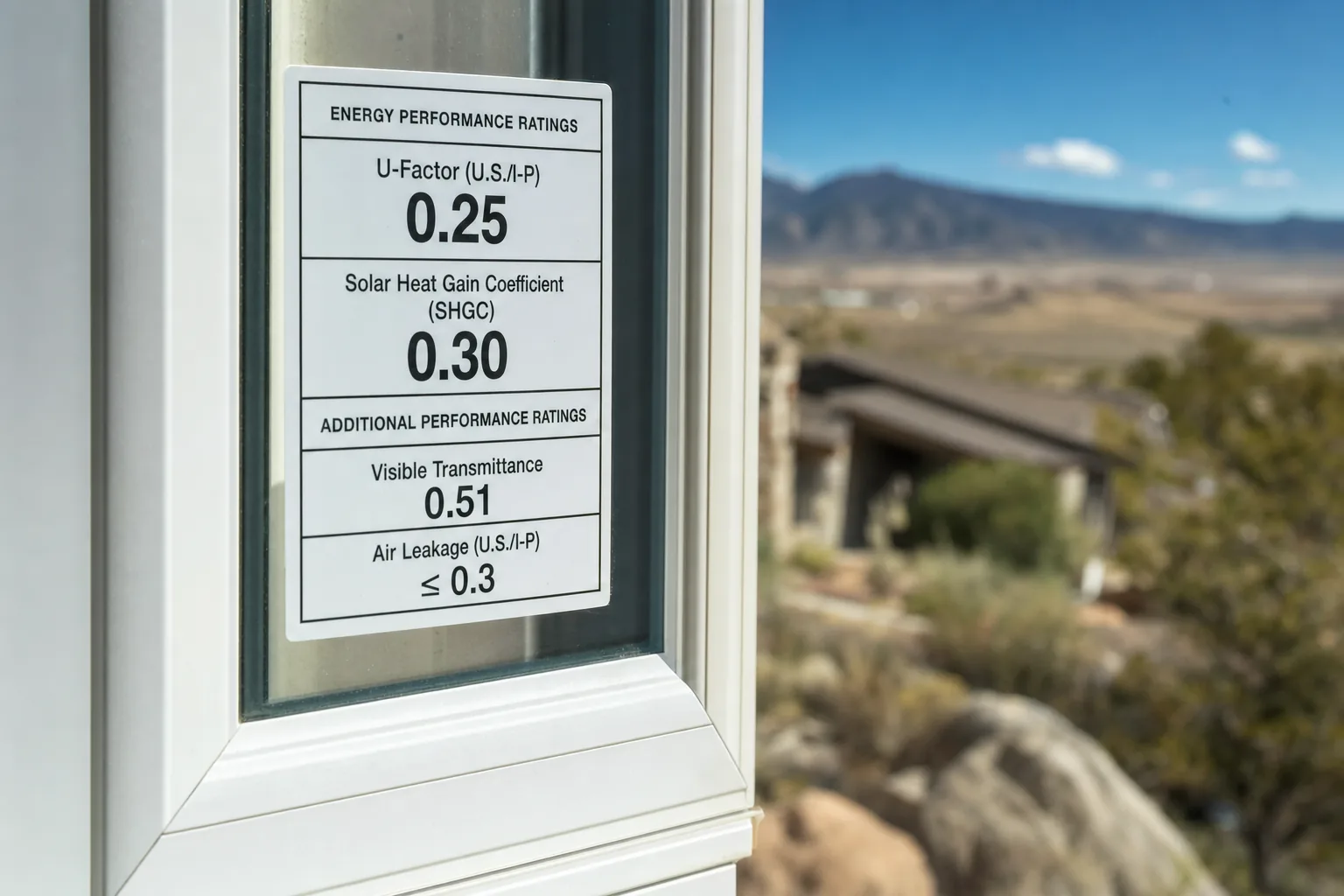
Every window sold in the United States carries a National Fenestration Rating Council (NFRC) label showing standardized performance ratings. Knowing how to read it helps you compare products objectively.
The U-factor is the primary insulation rating. Lower is better. For most Colorado applications, look for U-factor under 0.30. In colder locations or for particularly exposed exposures, under 0.25 is worth pursuing.
The Solar Heat Gain Coefficient tells you what fraction of solar heat the window lets in. This number has a right answer that depends on orientation and your goals. South-facing windows in a passive solar home may benefit from a higher SHGC. West-facing windows in a home that overheats in summer benefit from a lower one.
Visible Transmittance tells you how much natural light comes through. Higher is brighter. Most homeowners want this number to stay high while the other ratings improve.
When you're comparing quotes from different window companies, make sure the NFRC ratings are part of what you're comparing. Marketing descriptions vary; ratings don't.
About the author
Jeremy Holzmeister is the founder of Innovate Window and Door, a locally owned window and door company in Montrose, Colorado, with more than fifteen years of experience in the trade. Learn more about our team.