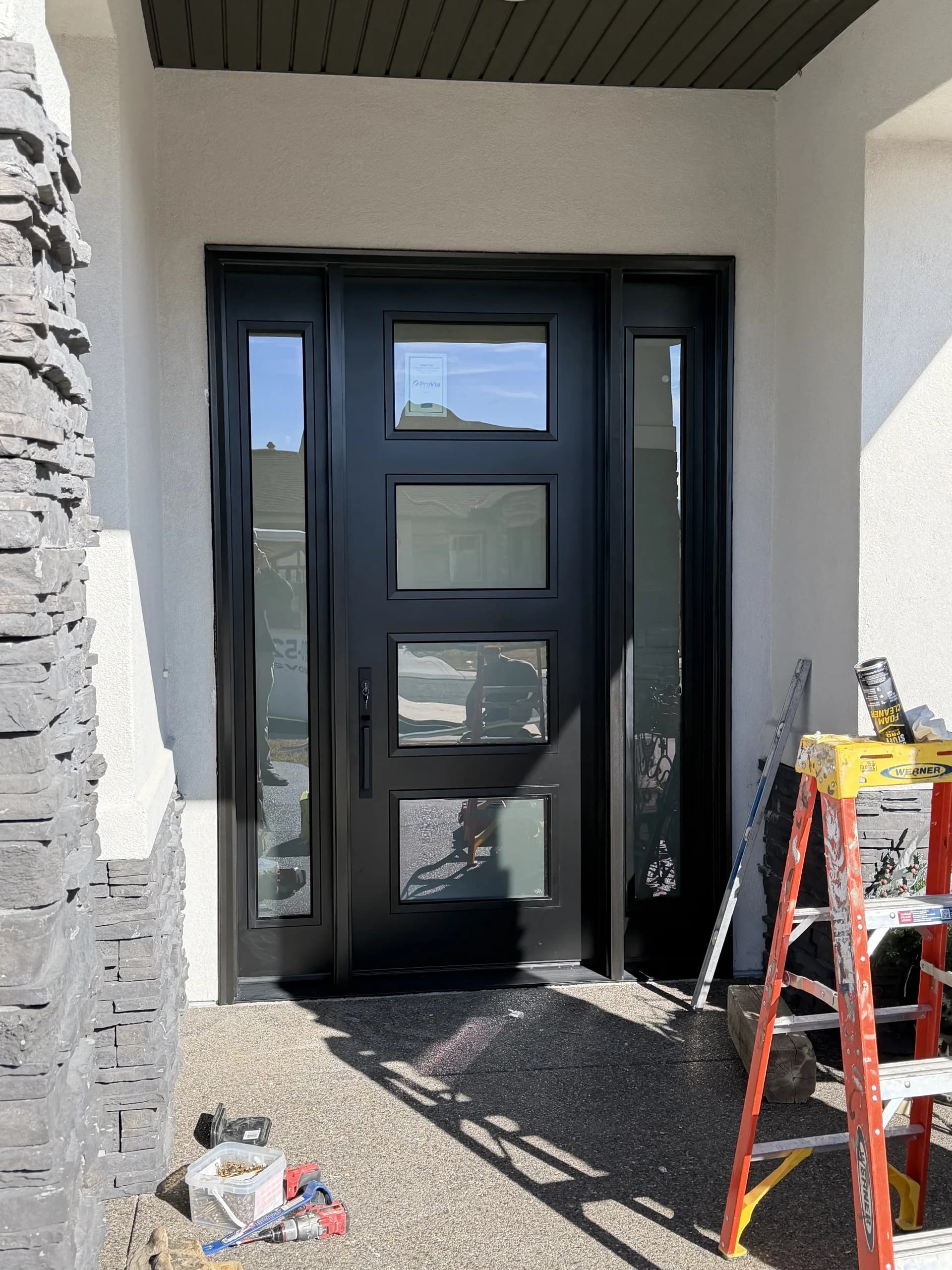
Fire rated door installation in Montrose, CO
Code-compliant fire door assemblies in every UL rating class, installed by technicians who know what actually qualifies.
Fire-rated doors are not a commodity purchase. The rating belongs to the complete assembly: door leaf, frame, hardware, glazing, and installation method all have to meet the labeled standard together. Innovate Window and Door sources labeled units through local and regional suppliers for UL 20-, 45-, 60-, 90-, and 180-minute assemblies, and carries ProVia fire-rated residential entry options for mixed-use and smaller commercial projects. We install to code and document the assembly so your building inspection goes cleanly.
All five UL fire-rating classes
Local and regional suppliers carry the full range from 20-minute corridor openings to 180-minute stairwell and exit enclosures, so one sourcing relationship covers your entire door schedule regardless of occupancy or rating requirement.
Complete assembly compliance
We specify door leaf, frame, hardware, and glazing as a coordinated assembly, not a mix of components from different manufacturers, ensuring the UL listing remains intact after installation.
Residential fire-rated entry options
For smaller commercial buildings, mixed-use, or unit-entry doors in multi-family projects, ProVia fire-rated entry doors offer an aesthetically polished solution that still meets the applicable code requirements.
Documentation for inspections
We provide labeling documentation and installation records so your authority having jurisdiction can verify compliance quickly, reducing the back-and-forth that delays certificate of occupancy on commercial projects.
Understanding fire-rated door assemblies and why the full assembly matters
A fire-rated door is not just a door with a label on it. The UL rating applies to the entire assembly: the door leaf, the frame, the hardware (closer, latching device, hinges, any electrified components), the glazing if the door includes glass, and the method of installation. Change any of those components to something outside the label's specification and the assembly no longer qualifies, regardless of what the door leaf says on the edge.
That distinction matters a great deal in practice. Buildings fail fire inspections when rated openings are retrofitted with hardware that doesn't meet the label, when doors are installed in frames that weren't part of the original listing, or when field modifications were made that seemed minor at the time. Innovate Window and Door treats fire door work as a complete assembly project from the start. We specify door, frame, and hardware together, order through local and regional suppliers using their labeled configurations, and install in a way that keeps every element of the listing intact.
The rating classes we install cover the full range required by IBC occupancy classifications:
- 20-minute: Corridor openings in non-fire-barrier assemblies, common in office and retail spaces
- 45-minute: One-hour fire barriers such as occupancy separation walls
- 60-minute: One-hour fire walls and exit access corridors in specific occupancies
- 90-minute: Two-hour fire barriers, common in stairwells and exit enclosures
- 180-minute: Three-hour fire walls and the most demanding separation requirements
If you're not certain which rating applies to your opening, the IBC table for fire protection of opening protectives is the reference, and we're happy to walk through it with you during a consultation.
Learn more about our broader commercial door installation services, or explore hollow metal doors, which are the most common substrate for fire-rated assemblies.
Commercial fire doors for offices, schools, and multi-family projects in Western Colorado
Fire door requirements show up across nearly every commercial occupancy type in Western Colorado. Schools and government buildings in Montrose and Grand Junction need rated stairwell enclosures. Retail and mixed-use buildings require corridor separation. Multi-family projects demand unit-entry doors that meet the applicable fire separation between living units and common areas.
Innovate Window and Door has experience with each of these contexts. For larger commercial projects requiring the full hollow metal catalog, local and regional suppliers are our primary source. For mixed-use buildings, smaller commercial properties, and multi-family projects where appearance matters at the entry, ProVia fire-rated residential doors deliver an aesthetically premium option that still meets the code requirements.
We serve fire door projects in Montrose, Grand Junction, Delta, Gunnison, Telluride, and the surrounding region. Contact us early in your project timeline; fire door lead times are longer than standard commercial doors and planning ahead keeps your schedule intact.
Ready to get started? Request a consultation and we will review your project's requirements together. You can also learn more about our installation process and what to expect from first contact through final inspection.
Fire-rated steel doors and fire-rated wood doors
Fire-rated doors come in two main constructions, and the right one depends on where the opening is and what it needs to look like. Fire-rated steel doors, built on hollow metal or commercial steel construction, are the workhorses of the category. They carry the full range of UL ratings, stand up to heavy traffic, and are the standard choice for stairwells, corridors, mechanical rooms, and other back-of-house openings where durability matters more than appearance.
Fire-rated wood doors use a mineral core wrapped in a wood veneer, delivering the same labeled fire resistance while presenting the warmth and finish of an architectural wood door. They belong in lobbies, offices, hotel corridors, and other spaces where the door is part of the design rather than just a code requirement. The trade-off is cost and, in some cases, the available rating range, since not every species and grade is offered in every rating.
For smaller commercial, mixed-use, and multi-family unit entries, ProVia's Legacy steel doors are available with a fire rating, which means a residential-grade steel entry door can satisfy a fire-separation requirement while still looking like a finished home entrance. We help you choose between a commercial steel, hollow metal, or rated residential door based on the opening, the occupancy, and the appearance you need. See our hollow metal and architectural wood doors pages for the substrates behind each rated assembly.
Frequently asked questions
The rating required for any given opening is determined by the fire-resistance rating of the wall assembly it sits in, which is itself driven by the building's occupancy classification, construction type, and the IBC chapter on fire and smoke protection features. In most cases, your architect or building department will specify the required door rating on the plans. If you have a door that needs replacing and you're not sure what it was originally rated, we can look at the door label (usually stamped into the edge of the door) and the frame assembly to help identify what was there. The authority having jurisdiction, your local building department, has final say on what qualifies.
Yes, but the glazing is part of the rated assembly and has to meet specific requirements. The amount of glass, the type of fire-rated glazing material, and the size of the light are all governed by the UL listing and the IBC. Standard tempered glass does not qualify as fire-rated glazing regardless of thickness. Fire-rated glazing is a specialty product that has to be specified and ordered as part of the door package. We handle that coordination when you're ordering through us, so the glass in the final door is part of the listed assembly rather than an afterthought.
Absolutely. Mixed-use buildings with residential units above commercial space, apartment buildings, and condominiums all have fire separation requirements that drive the need for labeled assemblies. For these applications, ProVia fire-rated residential entry doors are a strong option because they meet the code requirements while offering a level of design quality that's appropriate for a unit entrance rather than a service corridor. We can walk you through which product is right for your specific application based on the occupancy and the separation required.
If you replace hardware on a rated assembly with hardware that isn't part of the door's UL listing, the assembly technically no longer meets its labeled rating. This is one of the most common compliance issues found during fire inspections and insurance audits. The listing specifies acceptable hardware types; any substitution should be verified against the listing before installation. When we install fire door assemblies, we document the hardware specification so future maintenance and replacement decisions can reference what's required to maintain compliance.
Get a fire door quote for your project
Whether you need a single rated opening or a full door schedule, contact Innovate Window and Door for a consultation on fire-rated assemblies in Western Colorado.