Window Education
Window Styles Explained: A Homeowner's Guide
By Jeremy Holzmeister · · 9 min read
Window styles matter more than most people realize when they start a replacement project. Every window type has a different operating mechanism, a different ventilation profile, a different aesthetic, and a different relationship to the architecture around it. Choosing the wrong style for an opening isn't just a cosmetic issue: it affects how the room ventilates, how easy the window is to operate, and how it performs thermally.
This guide covers the most common residential window styles, what each does well, and how to think about matching the right type to each opening in your home.
Casement Windows
Casement windows hinge on one side and swing outward like a door. They're operated with a crank handle at the bottom of the frame, which makes them easy to open even when the window is above a counter or in an awkward location.
Casements are one of the best performers from an energy efficiency and air sealing standpoint. When they close, the sash presses against the frame on all four sides, creating a very tight seal. There's no gap along the sash the way there can be with double-hung windows. If air tightness is a priority, casement is worth considering.
Ventilation is another strength. Because the sash swings out, it can act as a scoop that channels air into the room when the wind comes from the side. In a cross-ventilation setup, casements are more effective at moving air than sliding or double-hung windows of the same size.
The limitation: they require clearance on the outside of the opening. You can't install a casement where a porch, deck, walkway, or neighboring building creates an obstruction. And they swing out, which means maintenance requires leaning out or working from the exterior.
Casements are popular in contemporary and modern homes, and the bold profile of a black casement window has become one of the more distinctive architectural choices in residential design right now.
Double-Hung Windows
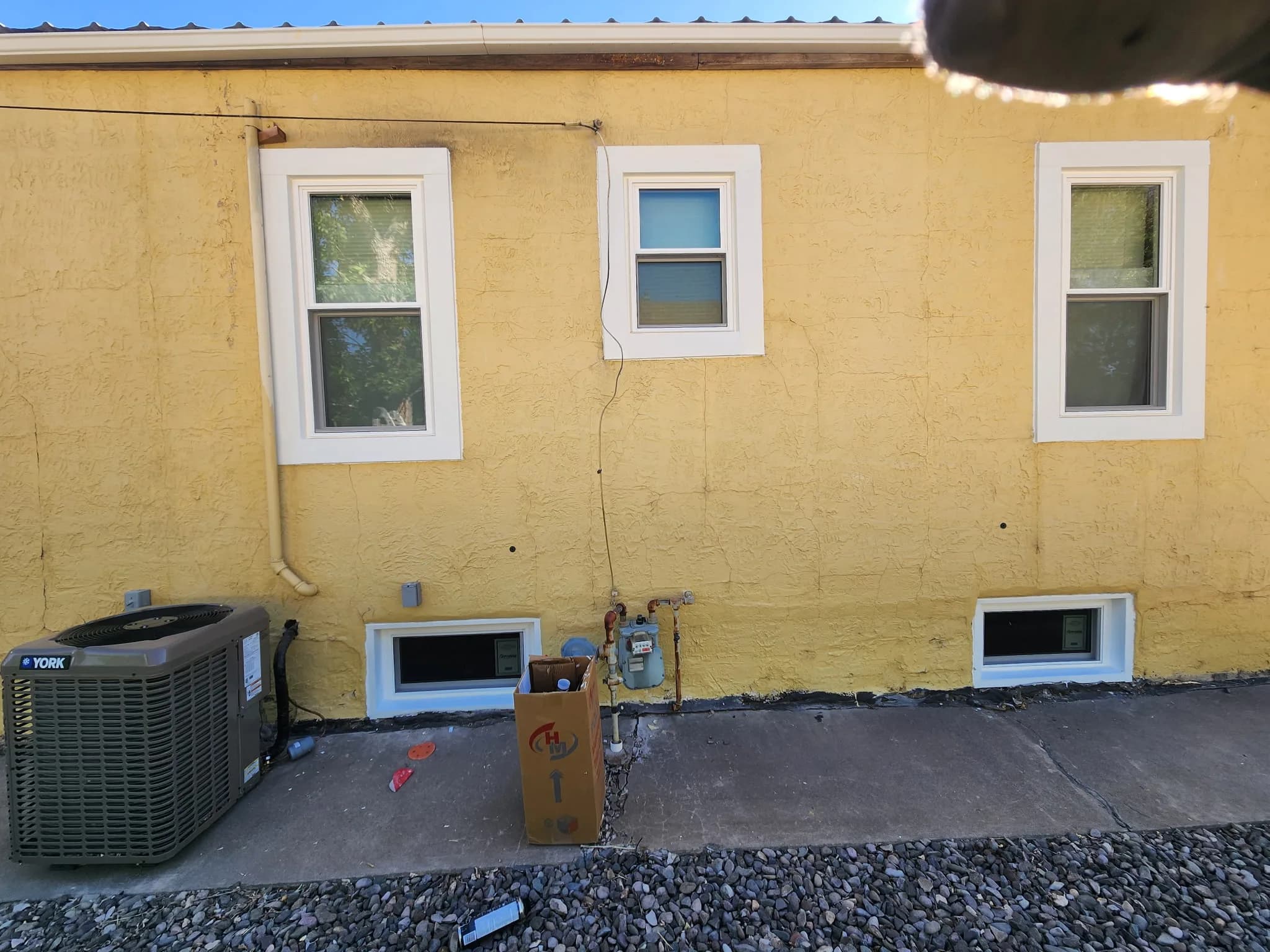
Double-hung windows have two sashes that slide vertically within the frame. Both the top and bottom sash move independently, which gives you options for how you ventilate. You can open the bottom for fresh air in, open the top to let warm air out, or open both for maximum airflow.
Double-hung is the most common residential window style in North America, and for most rooms, it's a practical default. It's familiar, it fits virtually any architectural context, and it doesn't require exterior clearance the way a casement does.
Modern double-hung windows from manufacturers like ProVia, Andersen, and Pella typically feature tilt-in sashes, meaning both sashes can be tilted inward for cleaning from inside the home. This is a bigger quality-of-life feature than it might sound, especially for second-story windows.
The main difference from casements: double-hung windows don't seal as tightly because the sashes slide rather than compress against the frame. Quality weatherstripping minimizes this, but casements have a slight edge in air sealing performance.
Slider Windows
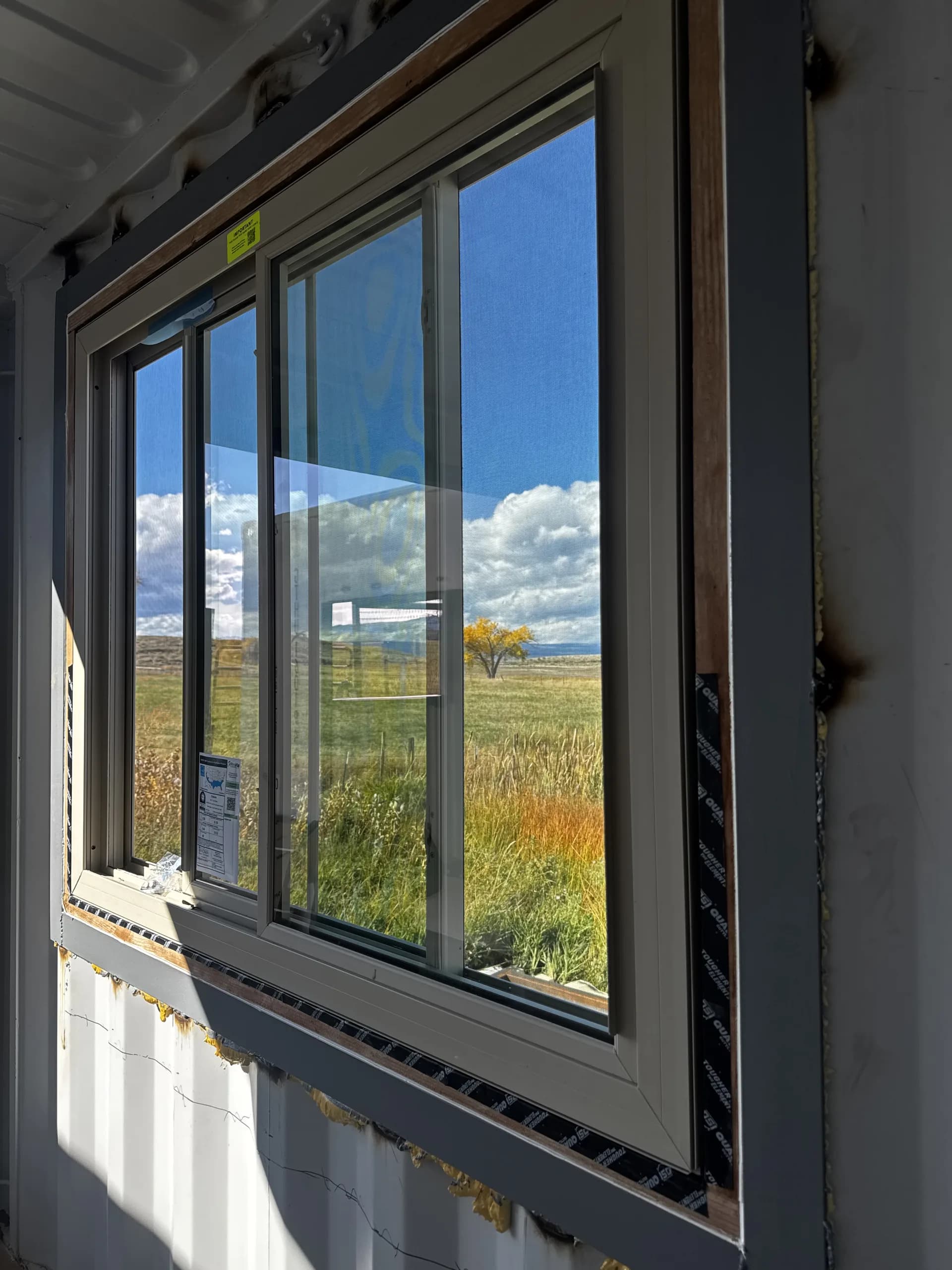
Slider windows operate horizontally, with one sash fixed and one sliding along a track. They're a good choice for openings that are wider than they are tall, like in basements or over kitchen sinks where a taller window would require stooping to operate.
Sliders are straightforward and dependable. No moving parts other than the sash itself. They work well in contemporary and ranch-style homes where horizontal lines are part of the aesthetic.
Like double-hung windows, sliders don't achieve the same air seal as a casement because the sash doesn't compress against the frame on all sides. But for most homes, the difference is minor, especially with quality construction.
Bay and Bow Windows
Bay windows project outward from the wall, creating an alcove of space on the interior. A traditional bay has three panels: a large fixed center panel flanked by two smaller angled windows (often casement or double-hung) that can be opened. Bow windows are similar but use four or more panels to create a gentler curve.
Bay and bow windows add usable interior space, dramatic natural light, and strong visual presence from both inside and outside. They're a significant architectural statement.
The installation complexity is higher than a standard replacement window. Bay windows need to be properly supported, insulated in the projection, and finished on the exterior to weather correctly. The installation is not a simple swap-in. Done right, though, a bay window transforms a room. Done poorly, it becomes a source of drafts and water intrusion.
For living rooms, reading nooks, and formal dining rooms, bay windows are one of the most requested styles we install. The combination of expanded sightlines and the natural seating area the alcove creates adds real functional value to a room.
Picture Windows
Picture windows are fixed. They don't open. The entire sash is one large pane of glass with no operating mechanism.
That constraint is also the advantage: without any moving parts or operating hardware, picture windows achieve the best thermal performance and the cleanest unobstructed view. For a wall facing Western Colorado's mountains or canyon views, a large fixed picture window is often the right choice.
They're commonly paired with operable windows on either side to provide ventilation while maintaining the expanse of glass in the center. The combination of a large fixed picture window flanked by casements is a popular design that gives you both the view and the airflow.
Awning Windows
Awning windows hinge at the top and open outward from the bottom, like a casement rotated 90 degrees. The name comes from how the open sash creates an awning effect that allows the window to stay open in light rain without letting water in.
Awnings are commonly used in bathrooms, basements, and utility rooms where ventilation matters but privacy or limited wall space rules out a larger window. They're also popular as clerestory windows positioned higher on a wall, where they can ventilate a space without creating a view or privacy issue.
Like casements, awning windows seal tightly when closed. They share the same limitation: they need exterior clearance to swing outward.
How to Choose the Right Style for Each Opening
The right window for any given opening comes down to a few practical questions:
Does the opening have exterior clearance? If something is directly outside the window (a porch, a deck, an adjacent wall), you need a window that doesn't project outward. Double-hung and slider are the right choices.
What are you prioritizing: airflow or thermal performance? Casements and awnings outperform double-hung and sliders on air sealing. If that opening is on an exposed elevation or in a room that runs cold in winter, that margin matters.
What does the architecture call for? Contemporary and modern homes lean casement. Traditional and craftsman homes lean double-hung. Neither rule is absolute, but matching the style to the architecture is worth thinking through.
Is this opening primarily for views? If the answer is yes, consider how much of the glass area you actually want devoted to the frame and hardware of an operable window. Sometimes a fixed picture window flanked by operable side units is the better solution.
A Note on Window Grilles and Finishes
Beyond the operating style, you'll also choose whether to add grilles (the dividers that create the appearance of individual panes) and what interior and exterior finish you want. These choices are more about aesthetics than performance, but they affect how the window reads from inside and out.
Manufacturers like Andersen, Pella, and ProVia offer extensive grille patterns, color options, and interior wood cladding choices. The range is wide enough that you can match almost any existing trim or achieve almost any aesthetic you're going for.
Getting the Right Windows for Your Home
Every home is different, and the right combination of window styles depends on your floor plan, your architectural style, your exposure, and your priorities. Browse our full window selection or reach out to talk through what makes sense for your specific situation.
We work with homeowners throughout Western Colorado and we're glad to walk through every opening with you, one at a time, until you have a clear picture of what you want.
About the author
Jeremy Holzmeister is the founder of Innovate Window and Door, a locally owned window and door company in Montrose, Colorado, with more than fifteen years of experience in the trade. Learn more about our team.