Door Education
Storm Doors vs Security Storm Doors: What's the Difference
By Jeremy Holzmeister · · 7 min read
When a homeowner calls asking about storm doors vs security storm doors, they usually think the two are interchangeable. They aren't. A standard storm door adds a layer of weather protection and lets you crack the front door open for airflow without letting bugs in. A security storm door does that too, but it also has to stand up to someone trying to force their way through it. Knowing which job you actually need done changes the frame material, the glass, the hardware, and what you should expect to pay in upkeep over the years. Here's how the two compare so you can pick the right one for your entry.
What a Standard Storm Door Actually Does
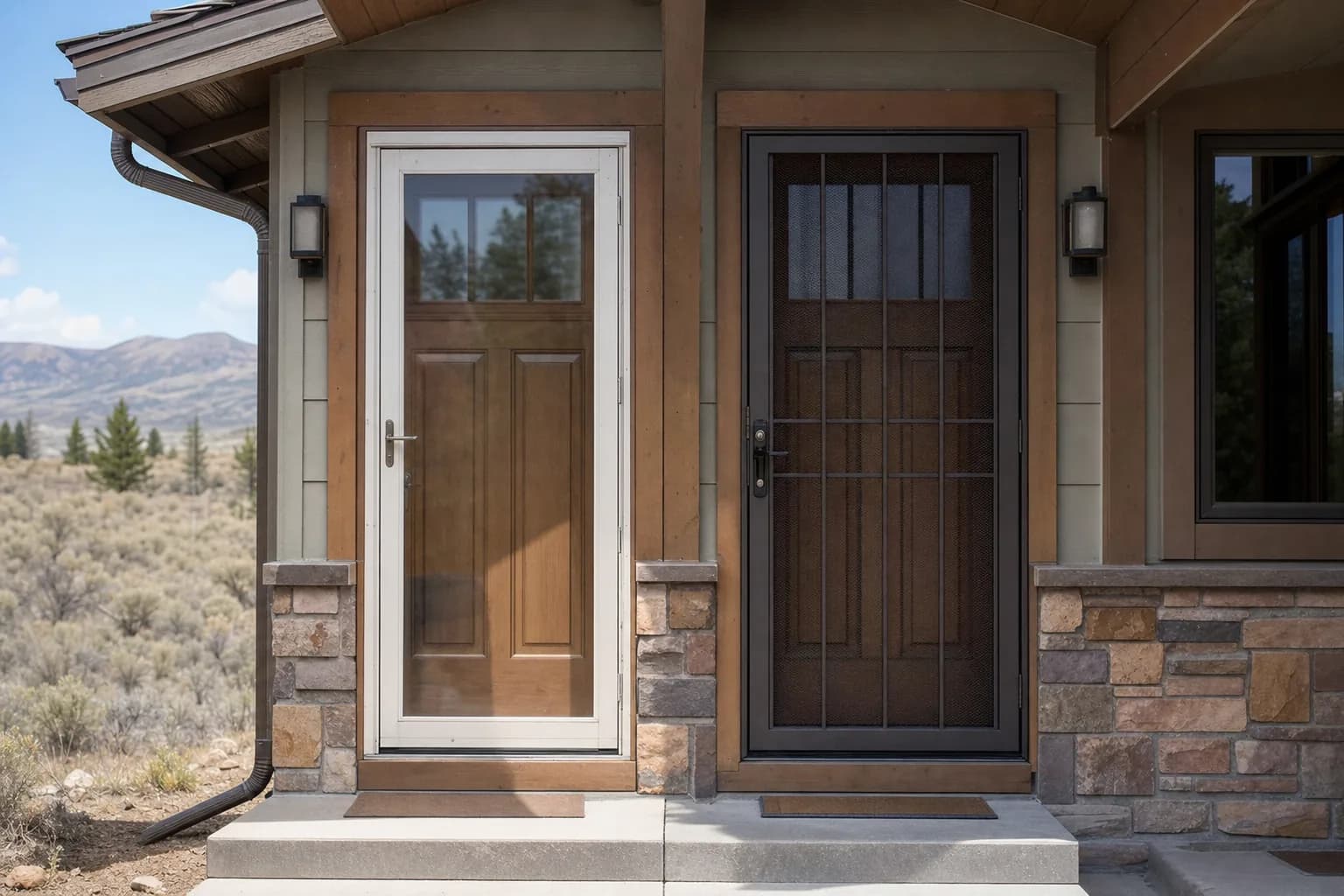
A standard storm door mounts over your existing entry door and adds a second barrier between your home and the weather. In our part of Western Colorado, that means blocking wind-driven rain, cutting down on winter drafts, and giving your entry door itself a break from direct sun and moisture, which extends the life of the finish and hardware underneath. Most storm doors use a lightweight aluminum frame with interchangeable glass and screen panels, so you can run a full glass panel in winter and swap to screen for warm-weather airflow. The glazing is typically standard single-pane glass, sometimes tempered for safety near a walkway, but not built to resist impact or forced entry.
Manufacturers size the closer, hinges, and latch on a standard storm door for wind resistance and everyday use. They aren't built to stop someone determined to get through the door.
That's not a knock on standard storm doors. For most households, that's exactly the right amount of door. They do their job well: added weather protection, better ventilation control, and a longer service life for the entry door behind them.
What Makes a Security Storm Door Different
A security storm door starts from a different design goal. Instead of just weather protection, it's built to resist prying, kicking, and forced entry while still functioning as a storm door underneath. That difference shows up in the frame, the glass, and the hardware. The frame itself is heavier gauge material, often steel or a reinforced aluminum extrusion, with a sturdier corner construction than a standard storm door's lightweight frame. The glass or screen panel usually sits behind a decorative but functional steel grille or expanded metal mesh, so even if the glass breaks, there's still a physical barrier in the opening.
Hinges are typically non-removable pin or security-style hinges, so nobody can pop them off from outside, and the lock is a multi-point or deadbolt-compatible unit rather than a basic latch.
None of that means a security storm door replaces a solid entry door and a good deadbolt. It's a layered addition, another obstacle between the outside and your front door, and it works best as part of an overall entry security approach rather than a stand-alone fix.
Storm Doors vs Security Storm Doors: Side-by-Side Comparison
| Feature | Standard Storm Door | Security Storm Door |
|---|---|---|
| Primary purpose | Weather protection and ventilation control. | Weather protection plus forced-entry resistance. |
| Frame material | Lightweight aluminum. | Heavier gauge steel or reinforced aluminum. |
| Glass or screen | Interchangeable glass and screen panels, standard glass. | Steel grille or mesh over glass, often tempered or laminated glass. |
| Hinges | Standard exposed hinges. | Non-removable pin or security-style hinges. |
| Locking hardware | Basic latch or single-point lock. | Multi-point lock or deadbolt-compatible hardware. |
| Weight | Light, easy for most people to operate one-handed. | Heavier, may need a stronger closer to manage the swing. |
| Typical use case | General weather and airflow needs on most homes. | Ground-floor entries, rental properties, homes prioritizing entry security. |
| Maintenance | Simple hinge and latch upkeep. | Same upkeep plus periodic hardware and grille inspection. |
Materials and Construction: Where the Difference Really Shows Up
The comparison above covers function, but the construction details are where a security storm door earns its name. Frame corners on a security unit are typically welded or use heavy-duty mechanical fasteners instead of the lighter corner keys found on a standard aluminum storm door frame. That matters because a weak corner joint is often the first failure point when someone tries to pry a door open. The mesh or grille adds another layer worth understanding. A single woven sheet of steel forms expanded metal mesh, so there are no individual bars to pry apart, while some grilles use welded steel bars in a decorative pattern instead. Either approach adds real resistance. The mesh style tends to hold up better against determined prying, though, since there's no single weak point to attack.
Glass matters too. Standard storm doors typically use annealed or basic tempered glass, chosen mainly for safety around a walkway rather than impact resistance. Security storm doors more often use laminated or heavier tempered glass behind the grille, adding a second line of resistance even in the unlikely event someone gets past the metal barrier.
Which One Fits Your Entry
For most entries in our service area, a standard storm door covers the need. If you're mainly looking to cut drafts, protect your entry door's finish from sun and weather, and get better control over ventilation on mild days, a standard unit does that well without adding much weight or cost to maintain. A security storm door makes more sense in specific situations: a ground-floor entry that's out of sight from the street, a rental or vacation property that sits empty for stretches of time, or a door that opens onto an alley or side yard. A household that wants extra peace of mind at the front entry is reason enough on its own. Consider it too on a secondary entrance, like a door from a garage or side yard, that doesn't get the same daily attention as your front door.
Climate plays a role in the decision too. Western Colorado sees strong seasonal wind and rapid temperature swings between valley floors and higher elevations around Telluride and Crested Butte, so whichever style you choose, look for a closer and hardware rated for wind resistance, not just a decorative option. A well-built storm door, standard or security, should hold its seal and swing true through a full range of mountain weather.
Installation and Maintenance Checklist
Whichever type you choose, a storm door only performs as well as its installation and upkeep. Keep these points in mind.
- Confirm the door fits and sits square in your existing frame before installation, since a poor fit undermines both weather sealing and security performance.
- Adjust the closer for the season, since cold weather can make hydraulic closers sluggish and change how the door seats against the frame.
- Inspect hinge screws and strike plates twice a year and tighten as needed, since seasonal temperature swings can loosen hardware over time.
- Clean the track and weep holes at the bottom of the frame so water drains properly instead of pooling.
- On a security storm door, check the grille or mesh attachment points periodically for looseness or signs of tampering.
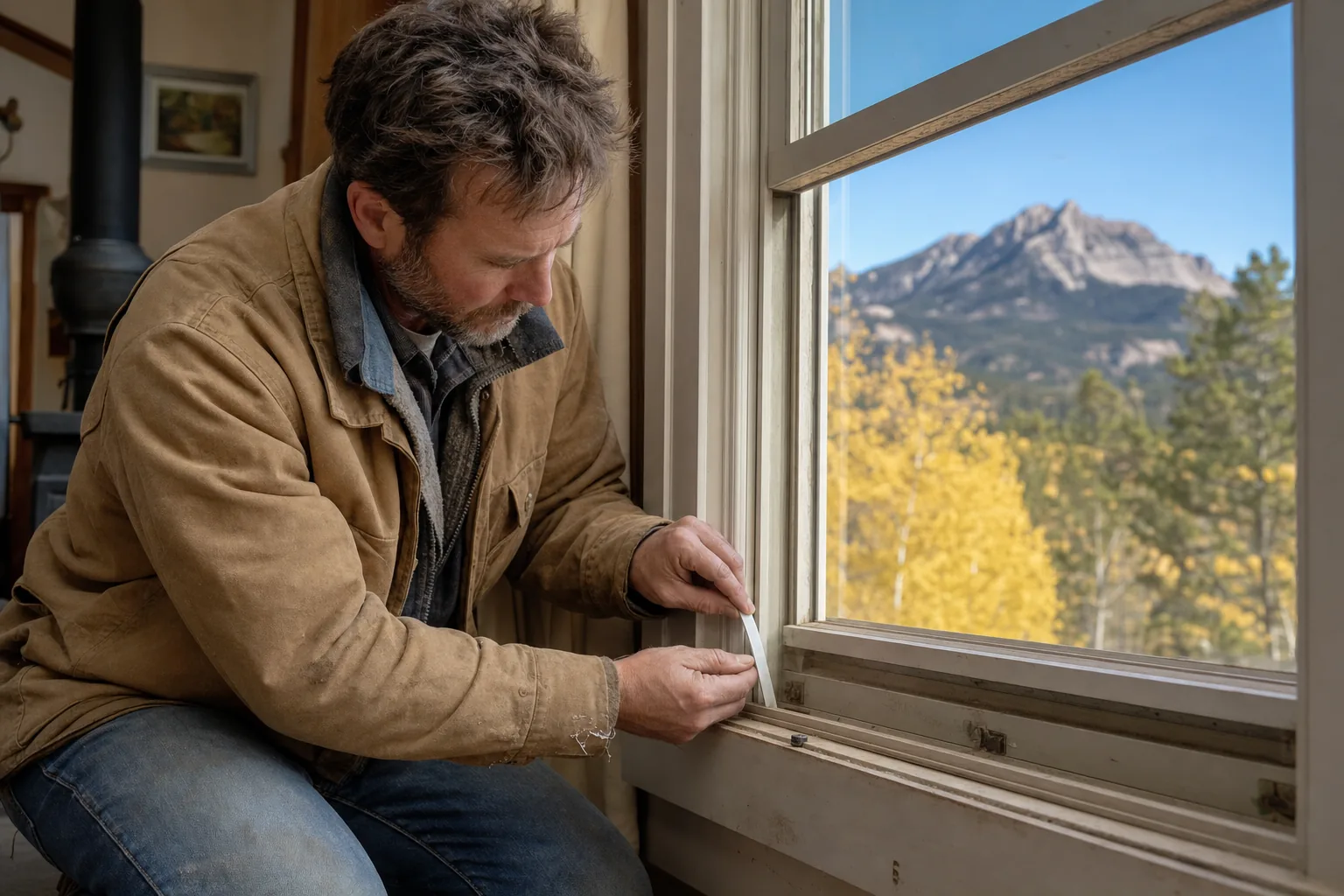
- Replace worn weatherstripping promptly, since a gap there undercuts the energy benefit of the door even if everything else is in good shape.
Get the Right Storm Door for Your Home
The storm doors vs security storm doors decision really comes down to what problem you're trying to solve at your front entry: weather and airflow, forced-entry resistance, or both. Either style, installed correctly and paired with quality hardware, adds real value to your home's entry, and the right call depends on your specific door, your neighborhood, and how you use that entrance day to day. If you're not sure which one makes sense for your home, that's exactly what a free estimate is for. Our team can look at your entry, talk through the tradeoffs in person, and help you choose between a standard and a security storm door based on your home and budget. Contact us to schedule your free estimate.
For more on protecting your entry, see how screen doors compare to storm doors across our climate, walk through our storm door installation checklist, or check out how french doors compare to sliding glass doors if you're planning a broader entry or patio door upgrade.
About the author
Jeremy Holzmeister is the founder of Innovate Window and Door, a locally owned window and door company in Montrose, Colorado, with more than fifteen years of experience in the trade. Learn more about our team.