Commercial Doors
What Is a Hollow Metal Door and Where Is It Used?
By Jeremy Holzmeister · · 7 min read
If you have ever walked into a school stairwell, a warehouse loading dock, or a hospital mechanical room, you have almost certainly walked through a hollow metal door. You probably did not give it a second thought. That is kind of the point. Building owners and contractors who are new to commercial construction often ask what is a hollow metal door and why it shows up in so many places where wood or fiberglass would not hold up. Here is the short answer. It is a steel-faced door built around a rigid core. It is designed for durability, fire resistance, and security in openings that take a beating every single day.
This guide covers how hollow metal doors get built, where they belong in a commercial building, and what to think about before you specify one for your next project.
What Is a Hollow Metal Door?
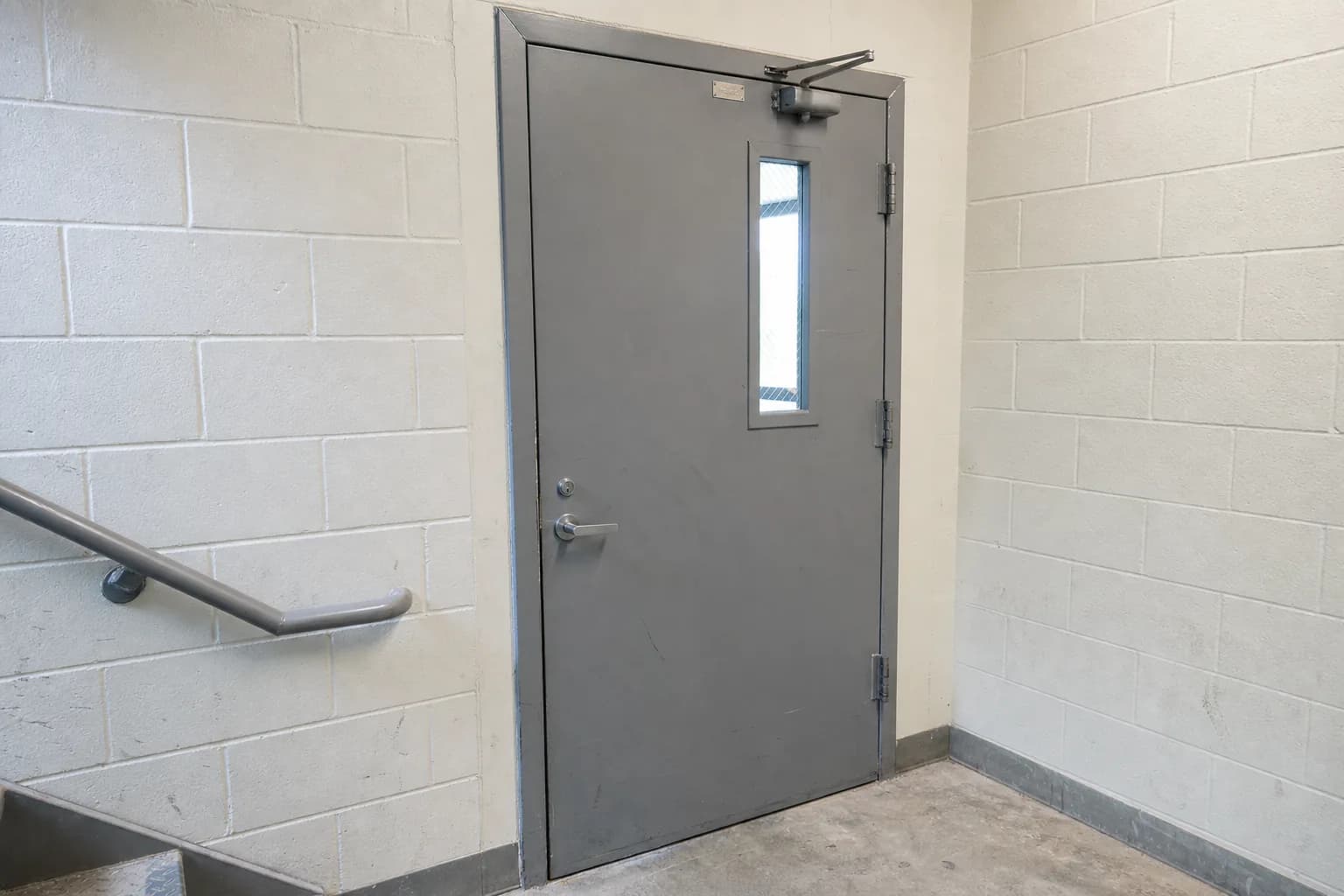
A hollow metal door is a door assembly made from two steel face sheets formed around an internal core and welded into one rigid unit. Despite the name, most hollow metal doors are not hollow at all. "Hollow metal" describes the manufacturing process: steel sheets pressed and formed around a core. It does not mean the door has an empty space inside. Manufacturers fill hollow metal doors with a core material. Common choices include honeycomb kraft paper, rigid polystyrene, polyurethane foam, or a dense mineral core for fire-rated units. Which one you need depends on the job the door has to do. Hollow metal doors almost always come paired with a matching hollow metal frame. Installers anchor that frame directly into the surrounding wall, whether that wall is masonry, steel stud, or concrete. Door and frame work together as one system, and that is a big part of why hollow metal openings hold up under heavy traffic. A residential-grade door would loosen up within months under the same abuse.
How Manufacturers Build Hollow Metal Doors
Steel gauge is the first thing a specifier looks at. The Steel Door Institute sorts hollow metal doors into physical performance levels, from standard duty up to extra heavy duty. Face sheets commonly run from 20 gauge up to 14 gauge. Thicker steel costs more to produce, but it also stands up to rougher handling, forklift traffic, and the daily abuse a loading dock door sees. The core material matters just as much as the steel skin. It shapes weight, sound control, and fire performance, and each option trades off differently. Honeycomb core is the lightest and cheapest choice, and it works well for interior doors with moderate traffic where fire rating is not a concern. Polystyrene and polyurethane cores add rigidity and some insulating value, which is why builders use them on exterior doors and on openings that separate conditioned space from unconditioned space. Mineral core costs more and weighs more, but it makes a fire-rated hollow metal door possible in the first place.
Manufacturers weld the seams and grind them smooth rather than screwing or gluing them together. That single detail explains a lot. A well-built hollow metal door will not develop the rattles, gaps, or warping that wood and hollow-core residential doors tend to pick up after a few years.
Where Hollow Metal Doors Show Up
Hollow metal doors get specified anywhere a building needs an opening that is durable, code-compliant, and low-maintenance. Looks come second. You will find them in stairwells and exit corridors where fire and life-safety codes require rated openings. You will also find them in mechanical and electrical rooms, on warehouse and loading dock personnel doors, and throughout schools, hospitals, and government buildings. They turn up on the back-of-house side of storefronts too, and in multifamily buildings guarding trash rooms and service corridors that residents rarely see. Manufacturers can build hollow metal doors with fire ratings, sound ratings, and security hardware preps installed at the factory. That is why these doors become the default choice whenever a code official, an insurance underwriter, or a life-safety plan reviewer has a say in the opening. Performance drives the decision in most of these spots, and that is the whole point of the material.
Hollow Metal Compared to Other Commercial Door Materials
Hollow metal is not the only option for a commercial opening. Wood, aluminum and glass storefront systems, and fiberglass all have their place. Picking the wrong one for the job is a common mistake on smaller commercial projects. The table below shows a general sense of where hollow metal typically fits against the alternatives.
| Material | Fire Rating Options | Durability | Typical Use |
|---|---|---|---|
| Hollow metal (steel) | Widely available | High, resists dents and impact | Stairwells, utility rooms, exterior service entries |
| Wood | Limited, more restrictive | Moderate, can warp with humidity | Office interiors, low-traffic areas |
| Aluminum and glass storefront | Limited | Moderate, glass is vulnerable to impact | Public-facing entries, retail |
| Fiberglass | Some options available | High, resists corrosion | Coastal or high-moisture exterior doors |
Wood still wins on looks for a quiet office interior. It cannot compete on a stairwell door that gets slammed forty times a day. For a deeper side-by-side on the two materials people compare most, see our post on hollow metal versus wood commercial doors.
Fire Ratings and Code Compliance
Hollow metal doors and frames can come as tested, labeled fire door assemblies. That makes them the standard pick anywhere a building code requires a rated opening: stairwell enclosures, corridor separations, and rooms that house mechanical or electrical equipment. Underwriters Laboratories tests and labels fire-rated hollow metal assemblies. Installers put them in and inspect them following National Fire Protection Association guidance, most notably NFPA 80. The rating your opening needs depends on the occupancy type, the wall assembly it sits in, and your local building and fire code. Do not guess on this part. Confirm it with your architect, code official, or door supplier before you order anything.
Hollow metal also stays easier to keep compliant over the long haul. Labeled fire door assemblies cannot be modified in the field, drilled, cut down, or resized, without voiding the label entirely. That rule catches more contractors off guard than you would expect. If your building has fire-rated hollow metal openings, routine inspection is not optional busywork. Our commercial door preventative maintenance checklist covers what to look for between formal inspections.
Choosing the Right Hollow Metal Door for Your Project
A handful of decisions shape which hollow metal door and frame combination fits a given opening. Frame type is the first fork in the road. Welded frames give the cleanest, most rigid installation for new construction, while knock-down frames ship unassembled and get built on site, which makes them a common choice for renovation work. Hardware preparation comes next. Manufacturers typically prep hollow metal doors at the factory for specific hinges, closers, panic hardware, and locksets, so nail down your hardware choices before you order the door, not after. A few other details matter too. Many hollow metal doors accept a vision lite, a glass window built into the door, for visibility at stairwells and corridors, within whatever limits the fire rating allows. Finish options range from a factory prime coat ready for field paint, to factory-applied paint, to laminate or wood-grain finishes on some product lines for a less institutional look. Exterior or temperature-separating openings generally call for a polystyrene, polyurethane, or thermally broken core rather than a basic honeycomb fill.
Getting these details right at the specification stage saves real headaches later. Field changes are not allowed once a fire-rated door is in place, so there is little room to fix a mistake after the fact. If you are working through Division 8 door specifications for a commercial project, our Division 8 commercial door specs primer is a useful companion to this guide. Our hollow metal commercial door page has more detail on the configurations we install regionally.
Talk to a Local Door Specialist
Hollow metal doors are a workhorse product. Getting the gauge, core, fire rating, and hardware prep right for a specific opening takes some know-how. Innovate Window and Door works with commercial building owners, property managers, and contractors across Montrose and Western Colorado on this kind of specification and installation work, sourcing commercial doors through CDF Distributors. If you have a project coming up and want a second set of eyes on your door schedule, contact us for a free estimate. We will walk the openings with you, talk through fire ratings and hardware, and put together a straightforward plan for your building.
About the author
Jeremy Holzmeister is the founder of Innovate Window and Door, a locally owned window and door company in Montrose, Colorado, with more than fifteen years of experience in the trade. Learn more about our team.