Commercial Doors
Commercial Door Preventative Maintenance: A Facility Manager's Checklist
By Jeremy Holzmeister · · 7 min read
If you manage a commercial building, you already know that doors are some of the hardest-working, least-appreciated components on the property. A solid commercial door maintenance checklist is the difference between catching a worn hinge on a Tuesday walkthrough and discovering a door that will not latch during a fire marshal visit. Doors take a beating that most other building systems never see: hundreds of open-close cycles a day, forklift traffic, slamming wind, and hardware that loosens a little more with every swing. This guide breaks that upkeep into monthly, quarterly, and annual tasks so nothing falls through the cracks, whether you are managing a single storefront entry or a full commercial building with dozens of openings.
Why Every Facility Needs a Commercial Door Maintenance Checklist
Doors fail slowly, then all at once. A closer that starts sticking in month one becomes a door that will not latch by month six. A hinge with a little play becomes a sagging door that scrapes the frame and lets weather and pests through the gap. None of these problems show up overnight, which is exactly why they get missed. Reactive maintenance means fixing a door only after it stops working. That approach almost always costs more time and disruption than catching the same issue early. A door that has fully failed usually means an emergency call, a temporary fix, and a tenant or employee locked out or exposed to the weather in the meantime.
A written commercial door maintenance checklist solves this by turning inspection into a habit instead of a guess. It gives whoever walks the property a consistent list to work through. The same items get checked the same way every time, regardless of who is doing the walkthrough. It also creates a paper trail. A maintenance log with dates and findings is worth far more than a verbal assurance that "someone checks the doors regularly," especially if a door assembly is ever questioned during an insurance review or a life-safety inspection. Commercial entries built on hollow metal doors or heavier-gauge commercial steel doors are durable by design, but durable does not mean maintenance-free. The frame, hardware, and weatherstripping around a steel door slab wear out long before the slab itself does.
Monthly Commercial Door Inspection Tasks
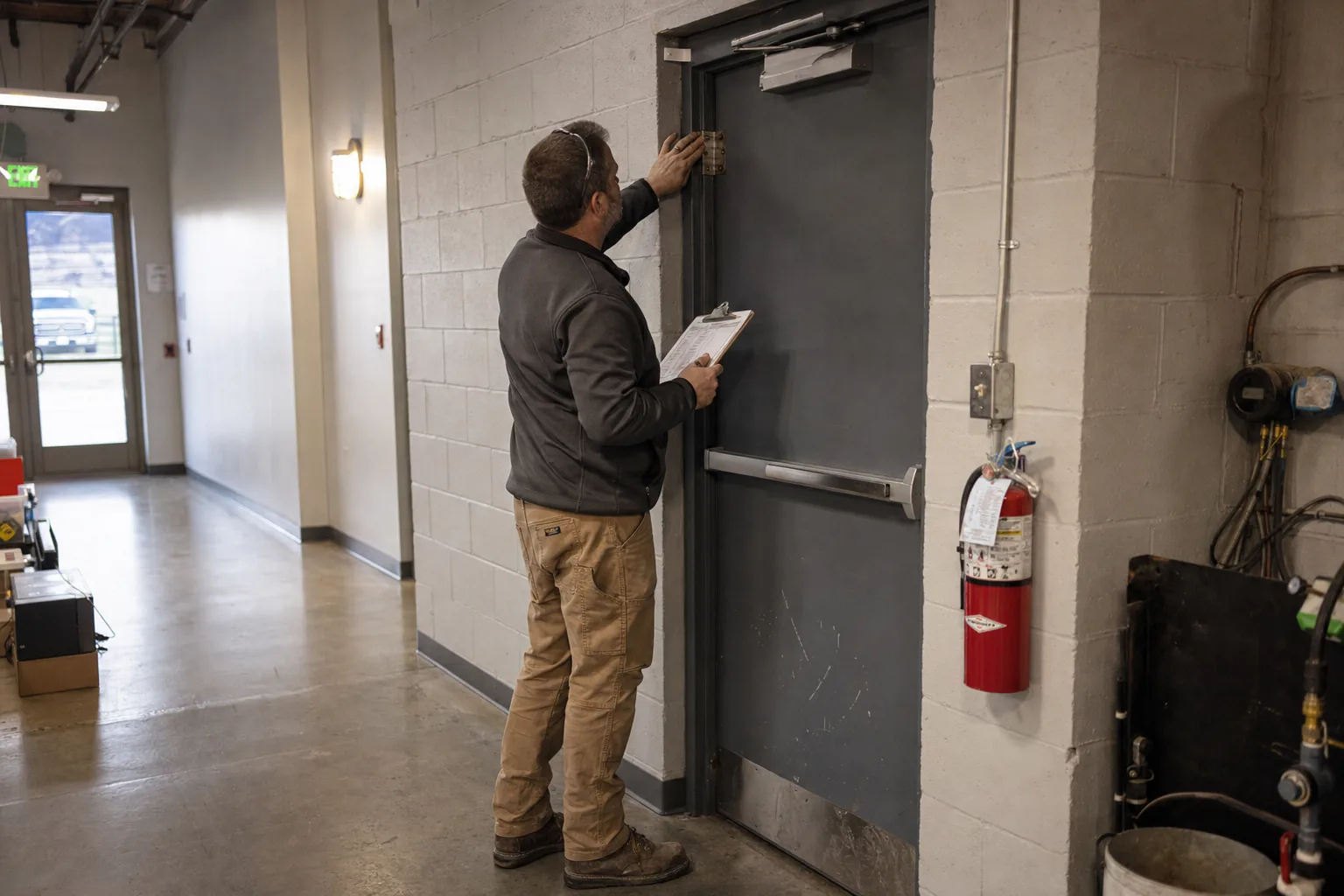
These are quick checks that any facility staff member can run during a normal walkthrough. Budget a few minutes per door.
- Open and close each door through its full swing, listening for grinding, sticking, or a closer that slams instead of easing shut.
- Self-closing doors should latch on their own. If someone has to push the last few inches by hand, that is already a work order, not a maybe.
- Look at hinges for visible play, squeaking, or loose screws.
- Weatherstripping and door bottoms: check for gaps, tears, or compression that no longer seals.
- Panic hardware and lever sets should move smoothly, with nothing taped, wedged, or propped in a way that defeats them.
- New rust spots, dents, or rubbing marks on the frame usually mean the door has drifted out of alignment.
- Exterior thresholds should be clear of debris that could catch the door bottom or hold water against the frame.
Quarterly Commercial Door Maintenance Checklist
Quarterly tasks go a step further than a visual walkthrough. They usually call for basic tools and a bit more time per opening.
- Lubricate hinges, pivots, and any exposed continuous hinge hardware with a lubricant rated for the hardware finish.
- Tighten loose hinge, closer, and strike plate screws before they work themselves out completely.
- Measure clearances between the door and frame. A gap that has grown wider, or a door that has started dragging on the frame, usually points to a hinge or frame problem, not a door problem.
- Test closer speed and adjust the sweep and latch settings if the door is closing too fast, too slow, or not fully seating.
- Check weatherstripping and sweeps for compression set and replace any sections that no longer make full contact.
- Inspect exterior doors for signs of moisture intrusion around the frame, especially after a rough stretch of weather.
- Verify keyed hardware and access control components (card readers, electric strikes, keypads) are functioning and properly aligned with the latch.
Annual Commercial Door Maintenance and Inspection Checklist
Annual tasks are where a facility manager's checklist overlaps with formal inspection requirements, not just routine upkeep.
- Have every fire-rated door assembly inspected under NFPA 80, which requires labeled fire doors to be inspected and tested at minimum once a year, with documentation kept on file for the authority having jurisdiction. We cover what that inspection actually involves in our fire door inspection frequency guide.
- Repaint or touch up any exposed steel surfaces where the finish has worn through, since exposed metal is where corrosion starts.
- Have a qualified technician inspect and service door closers, since a closer that is losing hydraulic pressure often cannot be adjusted back to spec and needs to be rebuilt or replaced.
- Check that all door hardware still matches its original specification, especially on rated openings. Field substitutions and unauthorized hardware swaps are one of the most common ways a fire-rated assembly loses its rating between inspections.
- Walk every exterior opening and confirm sills, thresholds, and flashing are still shedding water away from the building rather than toward it.
- Review your door inventory itself. Facilities change tenants, add security requirements, or expand square footage, and doors specified years ago do not always match current code or traffic patterns. If you are speccing new openings, our Division 8 commercial door specs primer is a good starting point for how ratings, hardware sets, and door schedules fit together.
Hollow Metal vs Steel Doors: What Changes in Your Maintenance Routine
Hollow metal doors and heavier commercial steel doors get grouped together often, but they do not wear the same way, and your checklist should account for the difference.
| Factor | Hollow metal doors | Commercial steel doors |
|---|---|---|
| Typical use | Interior openings, stairwells, back-of-house doors | Exterior entries, loading areas, high-traffic openings |
| Common wear point | Frame and hinge alignment over repeated interior traffic | Weatherstripping, thresholds, and finish exposed to weather |
| Corrosion risk | Lower, unless exposed to moisture or chemicals | Higher on exterior units; watch bottom edges and welds |
| Hardware demands | Moderate; standard closers and levers | Heavier-duty closers, panic hardware, and sometimes access control |
| Inspection priority | Fire rating, if the opening is rated | Weather seal integrity plus fire rating if applicable |
If you want more background on how hollow metal doors are built and where they make the most sense, our post on what a hollow metal door actually is breaks down the construction differences that drive these maintenance patterns.
Building a Maintenance Log That Actually Gets Used
The best commercial door maintenance checklist in the world does nothing if it lives in someone's inbox and never gets filled out. A simple log works better than an elaborate system: a spreadsheet or binder with one row per door, listing the door number or location, the last inspection date, what was checked, and any follow-up needed. Assign one person to own the log, even if multiple staff members do the walkthroughs. Pair the monthly and quarterly items with whatever recurring maintenance schedule your facility already runs, so door checks become one more line on an existing list rather than a separate program nobody remembers to start.
Facilities that keep this habit tend to catch problems while they are still an adjustment, not a repair. Facilities that skip it usually find out a door has failed the hard way. Someone gets locked out. A draft starts costing on the utility bill. A fire marshal flags a deficiency during an inspection nobody scheduled for.
Get Ahead of Commercial Door Problems Before They Start
A written checklist catches most issues early. Some repairs still call for a contractor who works on commercial openings regularly: closer rebuilds, frame realignment, or hardware that no longer matches a door's fire rating. Innovate Window and Door serves facility managers across Montrose and Western Colorado. We work on hollow metal and steel commercial doors through our CDF Distributors line and offer free estimates for both routine repairs and full door replacements. If your maintenance walkthrough turned up a door that needs more than a tightened hinge, reach out through our contact page to schedule a free estimate and get it handled before it becomes a bigger problem.
About the author
Jeremy Holzmeister is the founder of Innovate Window and Door, a locally owned window and door company in Montrose, Colorado, with more than fifteen years of experience in the trade. Learn more about our team.