Energy Efficiency
Double Pane vs Triple Pane Windows: A Side-by-Side Comparison
By Jeremy Holzmeister · · 7 min read
If you're comparing double pane vs triple pane windows for an upcoming replacement project, you're really weighing three things: insulation, noise control, and glass weight. Both options beat old single-pane glass by a wide margin. But the real-world gap between double and triple pane is smaller than a lot of marketing suggests. The right pick depends on your climate, your home's orientation, and the specific problem you're trying to solve. This guide breaks down how the two differ so you walk into your free estimate already knowing which questions to ask.
How Double Pane and Triple Pane Windows Are Built
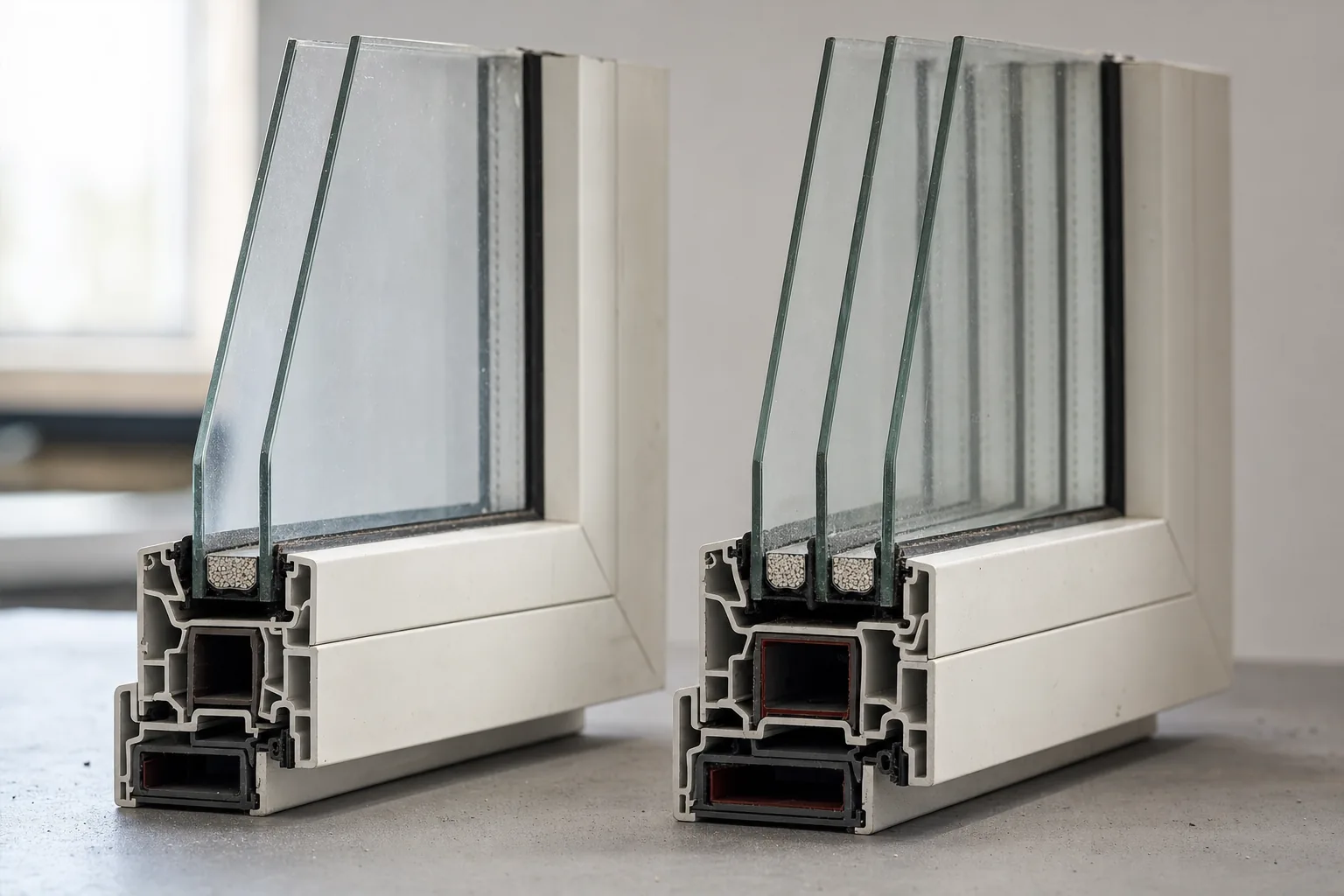
A double pane window has two sheets of glass separated by a single sealed gap, usually filled with argon gas instead of plain air. That gas slows heat transfer better than air alone. A triple pane window adds a third sheet of glass and a second sealed gap. Heat has to cross two insulating air spaces instead of one before it reaches your living room.
Both configurations typically use low-E (low emissivity) coatings. That's a thin metallic layer that reflects heat while still letting visible light through. The coating matters as much as the pane count. A well-coated double pane window can outperform a cheaply built triple pane window, so glass count alone doesn't tell the whole story. Frame material, spacer quality, and installation all affect how a window performs once it's in the wall.
Double Pane vs Triple Pane Windows: A Side-by-Side Comparison
Here's how the two options stack up across the factors homeowners in Western Colorado care about most.
| Factor | Double Pane | Triple Pane |
|---|---|---|
| Insulation value | Good, solid improvement over single pane | Better, an added air gap further slows heat transfer |
| Noise reduction | Noticeably quieter than single pane | Quieter still, especially against low-frequency road and wind noise |
| Window weight | Lighter, easier on hinges and hardware | Heavier, can need reinforced frames or hardware in larger sizes |
| Condensation resistance | Good in most climates | Better in consistently cold, high-elevation conditions |
| Glass clarity | Slightly better light transmission | A touch less clear on paper, though good low-E coatings close the gap |
| Best suited for | Moderate climates, budget-conscious jobs, standard-size openings | High elevation, north-facing exposures, busy roads, larger picture windows |
| Frame compatibility | Fits nearly any standard frame | May need a deeper frame profile depending on the manufacturer |
Neither option wins across the board. A double pane window with a quality low-E coating can be the smarter pick for a south-facing room. Rooms like that already get plenty of free heat from the sun. Triple pane earns its keep where the outside temperature swings hard and often, like at higher elevation.
Energy Performance and Comfort
The metric that matters most here is U-factor. It measures how much heat a window lets through, and lower numbers mean better insulation. Triple pane windows generally post lower U-factors than double pane windows built with comparable frames and coatings. ENERGY STAR uses U-factor, along with solar heat gain coefficient, to certify window performance for different climate zones. We cover what those terms actually mean in our breakdown of what ENERGY STAR tests for.
Comfort is where the difference is easier to feel than to measure. Triple pane glass keeps the interior surface of the window closer to room temperature. That cuts down on the "cold radiating off the glass" feeling you get sitting near a large window in January. Double pane windows have narrowed that gap a lot with better coatings and gas fills. They still run a bit cooler on the interior surface during a hard freeze, though.
Orientation changes this whole double pane vs triple pane windows calculation. A window that's great for a shaded north wall isn't automatically the right pick for a sun-drenched west-facing room. Our guide on solar heat gain coefficient walks through how sun exposure should factor into your glass choice.
Noise Reduction at Elevation
Western Colorado brings its own noise considerations that a generic manufacturer brochure won't cover. Wind at higher elevations moves differently than it does at sea level. Homes along US-550 or near Montrose's busier corridors deal with more consistent road noise than a quiet cul-de-sac. Triple pane's extra air gap breaks up sound waves better than a single gap does. That's why it tends to help most in these settings.
That said, glass thickness and gap width matter more for sound than pane count alone. Picture a double pane window built with two different glass thicknesses, one thicker pane and one thinner. It can dampen certain sounds almost as well as a standard triple pane unit does. If noise is your main complaint rather than heat loss, ask about glass thickness specifically. Don't just assume triple pane is the automatic answer. We go deeper on how mountain air and wind patterns affect glass performance in our piece on triple pane windows at high elevation.
Weight, Frames, and Installation Considerations
Extra glass means extra weight, and that has real consequences. A triple pane unit can be noticeably heavier than a similar double pane window. That matters most on larger openings like picture windows or oversized casements. Heavier sashes put more strain on hinges, balances, and locking hardware over time. Frame material and hardware quality become more important as pane count goes up.
Frame depth is another factor. Some triple pane units need a deeper frame profile to fit the extra glass and gap. That can affect how they fit into an existing rough opening during a replacement job. New construction sidesteps this, since the frame gets built around the window from scratch. If you're replacing existing windows rather than starting from a bare opening, ask about frame depth during your estimate.
None of this makes triple pane a bad choice. It just means installation quality and hardware selection carry more weight, literally and figuratively, than they do with double pane windows. An experienced installer sizes hardware and reinforces frames for the extra load. That's part of why the installer matters as much as the glass package you pick.
Which Option Fits Your Home
A few practical patterns tend to hold true across most of the homes we work on. Here's what we see most often:
- Standard-size windows in moderate exposures often do fine with a well-built double pane unit, especially with a quality low-E coating.
- Large picture windows, north-facing rooms, and homes at higher elevation tend to benefit most from triple pane's extra insulating layer.
- Homes near consistent road or wind noise usually see the biggest comfort improvement from triple pane, though glass thickness options can narrow that gap.
- Budget-conscious full-home replacements sometimes make more sense with double pane throughout, then triple pane just in the rooms where it matters most, a north-facing living room, for example.
There's no rule that says every window in a home has to match. Mixing double and triple pane by room, based on orientation and use, is a common and practical approach. Still deciding whether upgrading beyond your current windows is worth it at all? Our article on whether energy efficient windows are worth it walks through that bigger decision.
Getting the Right Recommendation for Your Home
Double pane and triple pane windows both have a real place in Western Colorado homes. The right answer usually comes down to one room and one problem. Maybe that's a drafty north wall, road noise, or just an old window that's run its course. ProVia, Andersen, and Pella, the residential brands we carry, all build solid options in both configurations. The decision comes down to fit, not availability.
The most reliable way to settle the double pane vs triple pane windows question is to have someone look at your windows in person. Someone who knows your orientation and elevation, not a generic chart. Innovate Window and Door offers free estimates across Montrose and Western Colorado. We'll walk your home with you and point out where double pane makes sense and where triple pane earns its keep. Contact us to schedule your free estimate and get a straight answer for your home.
About the author
Jeremy Holzmeister is the founder of Innovate Window and Door, a locally owned window and door company in Montrose, Colorado, with more than fifteen years of experience in the trade. Learn more about our team.