Window Education
Single Hung vs Double Hung Windows: What's the Real Difference
By Jeremy Holzmeister · · 8 min read
Stand in front of two windows, one single hung and one double hung, and you might not spot the difference at first glance. Same frame, same glass, roughly the same shape. Look closer and the difference between single hung vs double hung windows shows up in how they open, how you clean them, and how much control you get over airflow through the house. For a lot of homeowners, that difference decides which window actually makes sense for a given room.
Both styles fall under the broad umbrella of "hung" windows, meaning the sash (the framed part holding the glass) slides up and down inside the frame rather than swinging open like a casement or cranking outward like an awning window. Beyond that shared mechanism, the two styles part ways.
What "Hung" Actually Means
A hung window has one or two movable panels, called sashes, stacked inside a single frame. The sashes ride in tracks along the sides of the frame and move vertically. That's the whole family resemblance. Everything else, how many sashes move, how they lock, how they tilt for cleaning, comes down to which type you're looking at.
This style has been standard on American homes for generations because it's compact, weather-tight when installed correctly, and doesn't need clearance space outside the house the way an outswing casement or awning window does. That makes hung windows a practical fit for covered porches, walkways, and tight side yards where something swinging outward would be a problem.
It's also worth pointing out what single and double hung windows are not. Neither one cranks outward like a casement or awning window, and neither one slides side to side like a slider. If you've heard those terms used interchangeably with "hung," that's a mix-up worth clearing up before you start comparing quotes, since the operating style changes everything from the weatherstripping to how the screen sits.
Single Hung Windows: One Sash Does the Work
In a single hung window, only the bottom sash moves. The top sash is fixed in place, sealed permanently against the frame. You slide the bottom pane up to open the window and let it back down to close it.
That fixed top sash isn't a weakness. It's actually one of the reasons single hung windows tend to seal a little tighter around that upper section, since there's one less moving joint for air to slip through. Fewer moving parts also means simpler hardware, which is part of why single hung windows are often the more budget-friendly option between the two. If you're replacing a large number of windows across a house and want to control costs without giving up quality, single hung is usually the style worth pricing out first.
The tradeoff is flexibility. You only get airflow through the bottom half of the opening, and cleaning that fixed top sash from the exterior can mean a ladder unless the window is on the ground floor.
Double Hung Windows: Both Sashes Move
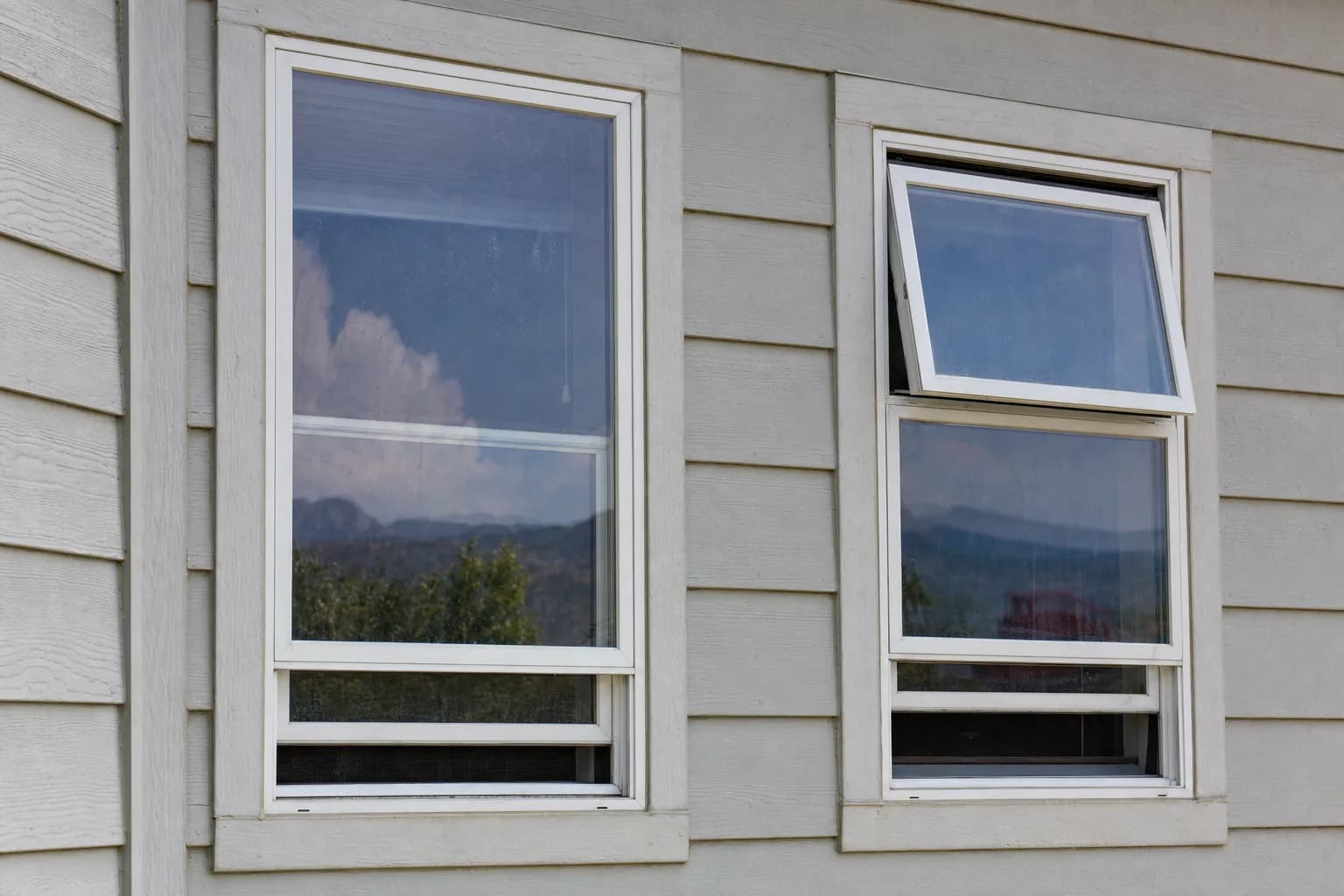
A double hung window does everything a single hung window does, then adds a second trick: the top sash slides down too. Both panels move independently, which opens up several practical advantages.
You can crack the window at the top and the bottom at the same time, which creates a natural convection effect. Warm air escapes through the upper opening while cooler air draws in from the bottom. On a mild Western Colorado evening, that's often enough airflow to skip the air conditioning altogether.
Double hung windows also tend to include tilt-in sashes on both panels, so you can clean the outside glass from inside the house without a ladder. On a second-story bedroom or a window over a kitchen sink, that feature alone is worth the upgrade for a lot of homeowners.
Single Hung vs Double Hung: Side by Side
| Feature | Single Hung | Double Hung |
|---|---|---|
| Sashes that move | Bottom only | Top and bottom |
| Ventilation control | Bottom opening only | Top and bottom openings, better airflow |
| Interior cleaning (tilt-in) | Bottom sash only | Both sashes |
| Moving parts / hardware | Simpler | More complex |
| Typical cost | Generally lower | Generally higher |
| Air seal at fixed sash | Slightly tighter | One more moving joint |
| Best fit | Budget-conscious replacements, ground-floor rooms | Upper-floor rooms, kitchens, rooms needing better airflow |
Neither column is the "correct" answer. It's a question of what a specific window opening needs to do.
Ventilation, Cleaning, and Energy Performance
Ventilation is where the two styles diverge the most in daily use. A single hung window gives you one opening at the bottom. A double hung window gives you two openings that work together, which matters most in rooms where you want airflow without cranking the thermostat down, think bedrooms, home offices, or a sunroom that overheats by early afternoon.
Cleaning is the other big divide. Both single hung and double hung windows from ProVia, Andersen, and Pella typically include tilt-in sash designs, but a single hung window only gives you that convenience on the bottom half. The fixed top sash on a single hung window still needs exterior access to clean, which is a bigger deal on a two-story home than a rancher.
Energy performance comes down to the glass package and installation quality more than the hung style itself. A well-installed single hung window with a quality low-E glass package can outperform a poorly installed double hung window every time. If energy efficiency is the priority, pay attention to the glass and the installation, not just the operating style. ENERGY STAR certified windows are rated as complete assemblies, frame, sash, and glass together, so a certified single hung and a certified double hung in the same climate zone should perform close to identically on paper. For a deeper look at how glass layers affect performance, our guide on double pane vs triple pane windows breaks down what actually moves the needle on energy bills.
There's one more wrinkle worth knowing. Because a double hung window has an extra moving sash and an extra set of seals, there are simply more places where a poor installation or worn weatherstripping can let air through over time. That's not a reason to avoid double hung windows. It's a reason to care more about who installs them and how the frame gets sealed to the rough opening than which style you pick.
Which One Fits Your Home
Four questions tend to settle the decision fast.
Is the window on an upper floor or somewhere hard to reach from outside? Double hung wins here. The tilt-in cleaning on both sashes is the reason.
Is the room prone to trapping heat, like a west-facing bedroom or a sunroom? Double hung's two-way ventilation genuinely helps here.
Are you replacing a large batch of windows on a fixed budget, or matching the look of an older home that originally had single hung windows throughout? Single hung is often the practical, and more historically accurate, choice.
Is this a ground-floor window where exterior cleaning isn't a hassle anyway? The tilt-in advantage of a double hung window matters less, so single hung can be the simpler, more cost-effective pick.
None of this is a rule. Plenty of homes mix both styles room by room, using single hung on the main floor and double hung upstairs. If you're weighing this decision alongside other window styles, our post on window styles explained covers how single and double hung compare to casement, sliding, and awning options, and choosing window styles by room walks through matching style to function room by room.
A quick checklist if you're standing in a room trying to decide:
- Second story or hard to reach from a ladder: lean double hung
- Ground floor, budget-driven replacement project: lean single hung
- Room that traps heat or needs cross-breeze: lean double hung
- Matching an older home's original single hung look: stay single hung
- No strong preference either way: pick based on the rest of the window package (glass, brand, warranty) instead
That last point matters more than people expect. Once you're choosing between quality brands like ProVia, Andersen, and Pella, the hung style is often a smaller decision than the glass package, the frame material, and how the installer flashes and seals the opening.
Get a Straight Answer for Your Windows
Both single hung and double hung windows are solid, proven choices. The right one depends on the room, the floor, and how much you value that extra tilt-in convenience on the top sash. If you're still not sure which fits a specific window in your house, that's a fast conversation, not a research project.
Innovate Window and Door installs single hung windows and double hung windows from ProVia, Andersen, and Pella across Montrose and Western Colorado, from Delta and Grand Junction out to Telluride and Gunnison. Reach out through our contact page for a free estimate, and we'll walk your home room by room to figure out which style actually earns its place in each window opening.
About the author
Jeremy Holzmeister is the founder of Innovate Window and Door, a locally owned window and door company in Montrose, Colorado, with more than fifteen years of experience in the trade. Learn more about our team.